
Tension in the Middle East, Mushfiqs Wait and a New Reality in World Cricket
97 Repoter: Mohammed Afzal
Publish: 7 months ago Update: 1 second ago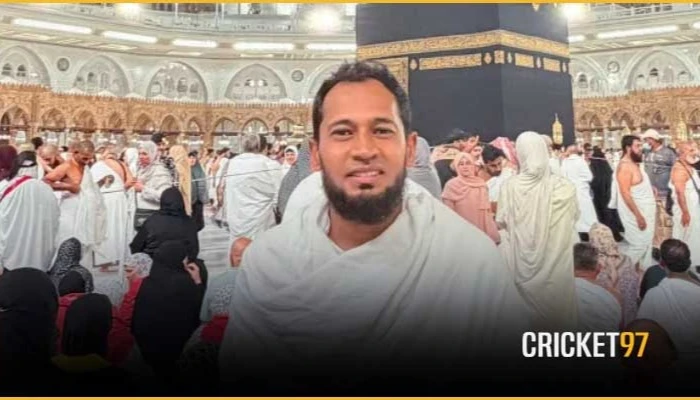
Tension in the Middle East, Mushfiqs Wait and a New Reality in World Cricket
Tension in the Middle East, Mushfiqs Wait and a New Reality in World Cricket
Military tensions in the Middle East have now extended beyond the boundaries of international politics and reached the cricketing world. The symbol of this instability has become Bangladesh’s experienced cricketer Mushfiqur Rahim. On his way back home after performing Umrah, his flight was canceled, leaving him stranded in Jeddah, Saudi Arabia. Due to security concerns in the airspace, multiple flights have been suspended, forcing him—along with thousands of other passengers—to wait indefinitely. The Bangladesh Cricket Board is monitoring the situation.
Mushfiq’s predicament is not merely a story of personal inconvenience; it also highlights the fragile reality of the global sports system. In today’s world, the mobility of an international athlete depends heavily on global communication and transportation networks. Middle Eastern airspace has long been a vital international transit hub. In particular, Dubai has served as a key connection point for international cricket travel. Any uncertainty along this route due to regional conflict inevitably puts pressure on the logistical framework of world cricket.
Currently, India and Sri Lanka are hosting the T20 World Cup. Although the matches are not being held in conflict-prone areas, countless individuals associated with the tournament rely on transit routes through the Gulf region. Many players, coaching staff, match officials, and broadcast personnel have return plans connected to this region. As a result, while airspace instability may not directly disrupt the World Cup’s fixtures, it has created indirect logistical uncertainties.
In this context, the International Cricket Council (ICC), the governing body of world cricket, is closely observing the situation. A spokesperson said, “The safety and well-being of everyone connected to this event remains the ICC’s highest priority. We have activated our travel, logistics, and security teams and are working around the clock to ensure that all stakeholders can return home safely and without disruption. We also urge fans who have traveled or are planning to travel to India and Sri Lanka for the T20 World Cup to closely follow the guidance issued by relevant authorities and carefully consider all factors before undertaking any new international travel.”
The incident of an experienced cricketer like Mushfiqur Rahim being stranded abroad underscores the fact that sports and politics are not entirely separate. Strained international relations, regional security crises, and dependence on global transportation networks are now part of athletes’ everyday realities. Cricket has previously faced geopolitical challenges, including matches being shifted to neutral venues or tours being canceled due to security concerns. The current situation serves as a reminder of that history.
If conditions normalize quickly, this uncertainty may prove temporary. However, if the crisis persists, future planning for international tournaments may involve revised approaches to risk assessment. Greater emphasis may be placed on diversified transit planning and alternative travel frameworks. Mushfiq’s wait in Jeddah, therefore, is not just the story of a cricketer trying to return home—it reflects the complex realities of global sports politics.