
The Wait Ends, Jammu and Kashmir Script a New Chapter in the Ranji Trophy
97 Repoter: Mohammed Afzal
Publish: 7 months ago Update: 1 second ago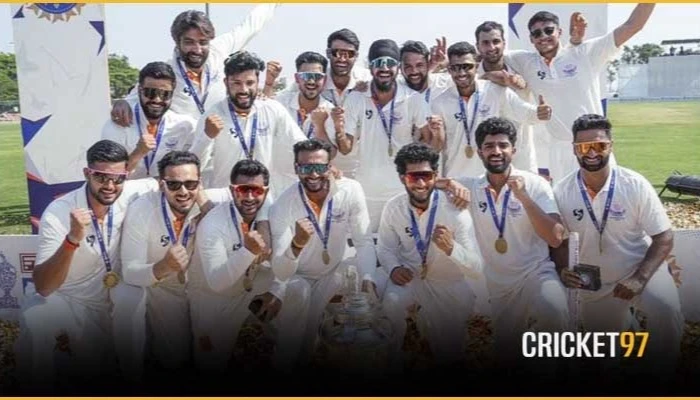
The Wait Ends, Jammu and Kashmir Script a New Chapter in the Ranji Trophy
The Wait Ends, Jammu and Kashmir Script a New Chapter in the Ranji Trophy
The sky over Hubballi on Saturday was lit not only by fireworks, but by the reflection of a region’s long-awaited moment. Even before the Ranji Trophy final formally concluded, everyone knew which way the result was heading. Yet until 2:11 pm, when the two captains shook hands, time seemed to stand still. For Jammu & Kashmir, this was not merely the story of winning a trophy—it was a declaration of identity.
Jammu & Kashmir laid the foundation of the match with a commanding 584 in the first innings, effectively shaping the course of the final. On a stage as grand as this, such a total was proof not only of skill, but of mental resilience. In reply, Karnataka were restricted to 293. The gap was not just significant in terms of runs, but also in confidence. That first-innings lead ultimately sealed the title.
The second innings unfolded like a symbolic journey. Kamran Iqbal, unbeaten on 160, demonstrated how to absorb and control pressure. His innings was a blend of patience, discipline, and assurance. At the other end, Sahil Lotra’s century marked a moment of dream fulfilled. His push-up celebration and the emotion he shared with the crowd carried the taste of history in the making. The two batters batted through nearly two sessions without losing a wicket, allowing time to move at their pace.
However, the greatest credit behind this triumph belongs to the bowling unit. Aqib Nabi, who claimed 60 wickets throughout the season, struck with a five-wicket haul in the first innings of the final to put the opposition under pressure. His consistency was a defining factor in Jammu & Kashmir’s campaign. Being lifted on the shoulders of his teammates during the celebrations was a fitting recognition of his effort.
Although the final day lacked competitive tension, it was not devoid of emotion. KL Rahul rolled his arm over in first-class cricket after a long time. Mayank Agarwal dropped a potential catch—an incident that did not alter the outcome but sparked delight in the stands. Later, captain Devdutt Padikkal withdrew Rahul from the attack, drawing playful reactions from the crowd and adding a human touch to the atmosphere.
This final was a contest of control, and Jammu & Kashmir had seized it from the very beginning. By the fourth day, they had firmly tightened their grip on the match. The fifth day became one of anticipation, confidence, and belief. As drums beat, flags waved, and celebrations filled the ground, it became evident that this success was not merely a cricketing achievement—it was an emotional victory.
By lifting the Ranji crown for the first time, Jammu & Kashmir have carved out a new identity in domestic cricket. This was no sudden success; it was the result of long preparation, sound planning, and mental strength.
Though the scoreboard recorded the final as a draw, in cricketing terms it was a one-sided final. History will remember this victory as a symbol of courage, belief, and self-assertion.